
How big should a yard catch basin be?
Most residential basins have a 9 to 12 inch grate. The size follows the area draining to it and the pipe leaving it; a basin collecting a large patio or several downspouts gets a bigger grate and pipe.
Service
A catch basin catches water standing on the surface and sends it away in solid pipe. On Irving clay, where puddles cannot soak in, it is often the most direct fix.
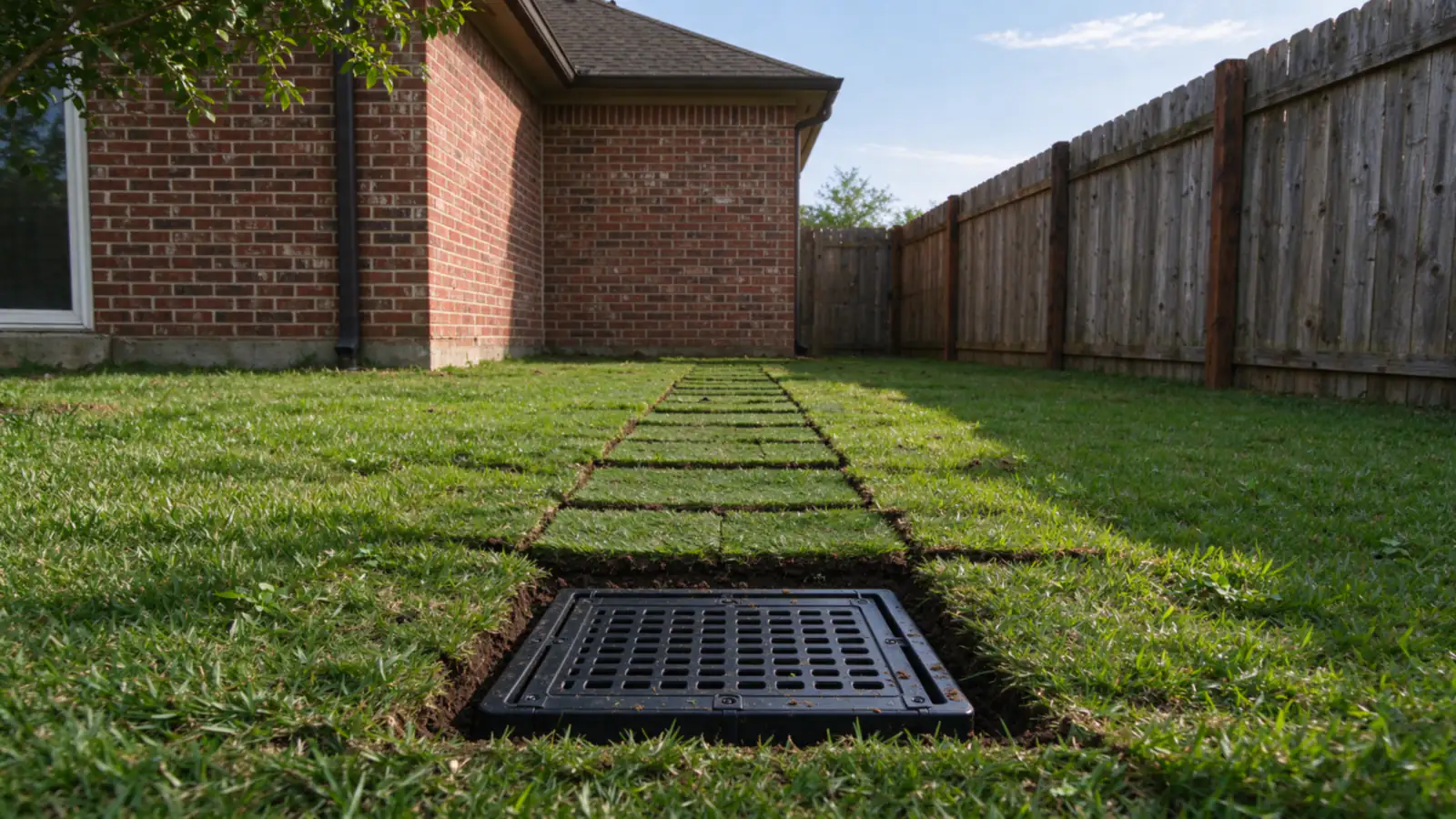
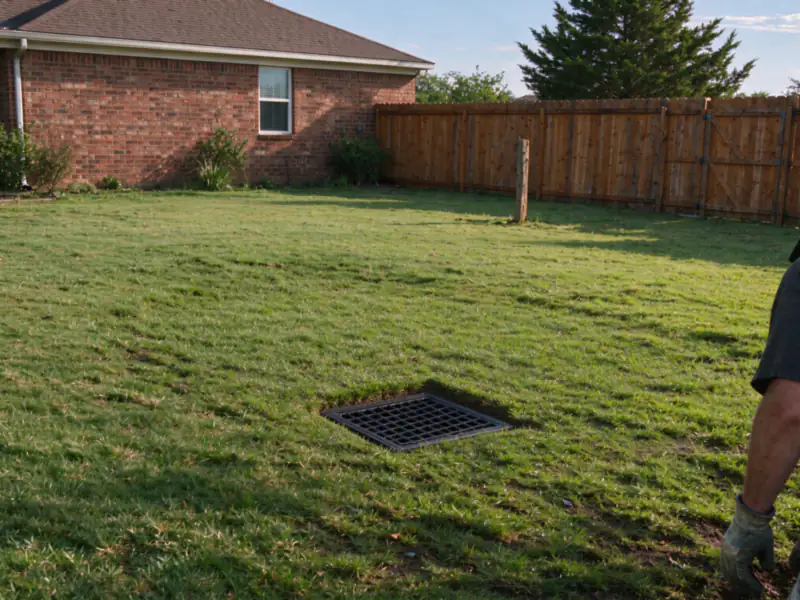
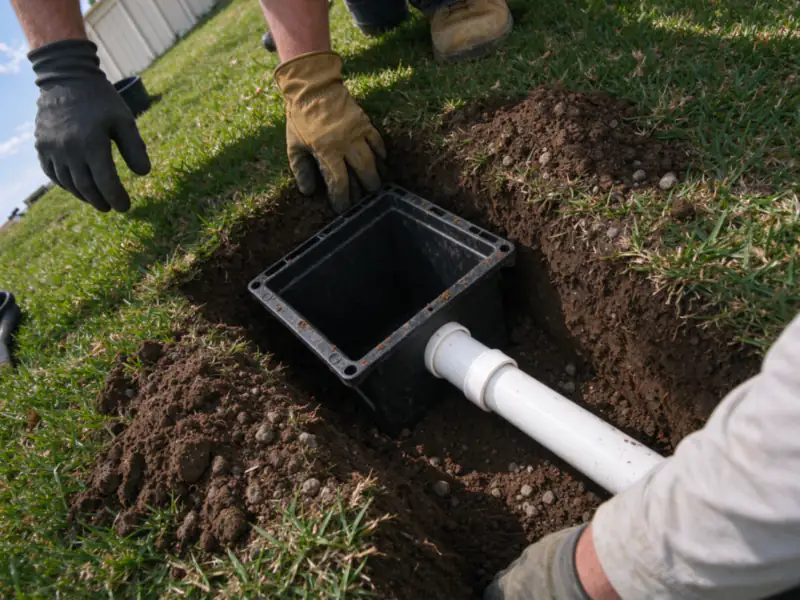
A catch basin is a grated box set at the lowest point of a lawn, bed or patio. Surface water drops through the grate, sediment settles in a small sump at the bottom, and the water leaves through solid pipe to an outlet. Rein Irving Drainage Company installs catch basins where water stands on the surface after every storm, which on Irving clay is exactly where many yard problems start.
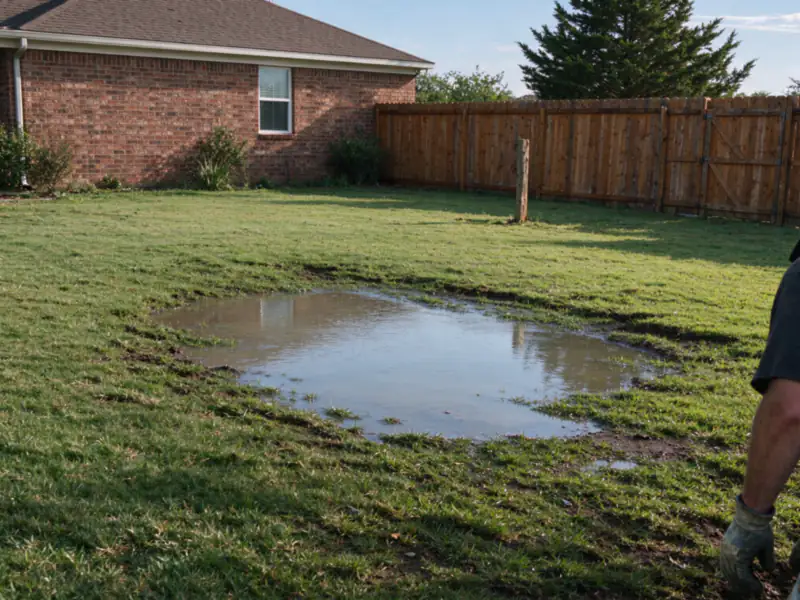
Catch basins solve surface water: puddles that sit on top of dense soil because the water cannot soak in. That describes much of Las Colinas and north Irving, where the USDA soil survey maps Ferris and Heiden clay that is about half clay particles and absorbs water extremely slowly. It also fits:
A catch basin does nothing for water already moving through the soil. Ground that stays soft for days with no visible puddle usually needs a French drain instead. Many Irving yards need both on one line; the French drain versus catch basin guide explains how to tell which you have.
The basin itself is simple. Getting water into it, and out of it, is the work.
A catch basin is only as good as its outlet. Typical choices are a curb core through the street curb, the alley line, a grassed swale, a pop-up emitter in a lower part of the lawn, or a sump where nothing lower exists. University Park requires roof drainage to be piped to the curb or alley, Coppell has issued curb cores for yard drains as engineering permits, and Grand Prairie bars concentrating runoff onto a neighbor’s lot. For Irving we confirm the rule per address. See where drainage water can go.
Basins work well alongside buried downspouts, since both carry surface water and can share one solid pipe to the outlet. Where a low spot is also the result of soil built up against the house or a sunken area of lawn, regrading the area around the basin finishes the job. For yards with several problem areas, basins become part of a whole-yard drainage system.
In paving, water moves as a sheet across the surface. A single basin catches only what reaches its grate, so patios and pool decks often get a long channel drain at the low edge instead, or a basin at a low corner where the slope already concentrates water. Cutting concrete adds to the cost, so the layout follows the slope that is already there whenever possible.
Rein Irving Drainage Company plans and manages each job; installation is carried out by licensed and insured drainage contractors we work with.
As a national budgeting range, a catch basin with solid pipe to an outlet runs about $500 to $1,500. Most of the cost is the trench to the outlet rather than the box, so a second basin on the same line costs much less than the first. Basins in concrete cost more because paving has to be cut and replaced. The catch basin cost guide shows what moves the number, and the cost tool gives a quick range.
Basins collect leaves, mulch and roof grit by design, which keeps that debris out of the pipe. Lift the grate and clear the sump after leaf drop and after the first big spring storm, and check the outlet is clear. A basin that holds water a day after rain usually has a blocked or flat line downstream; drainage repair starts by finding where. The cleaning guide has the details.
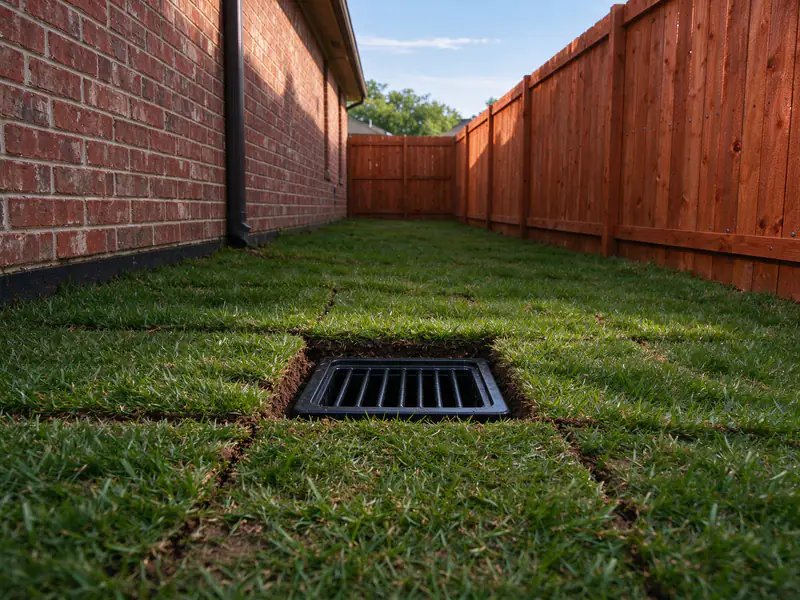
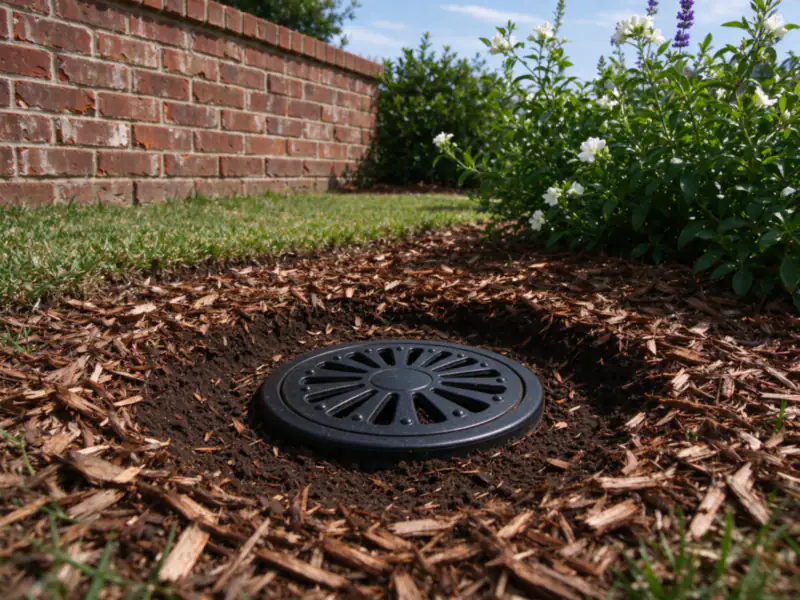
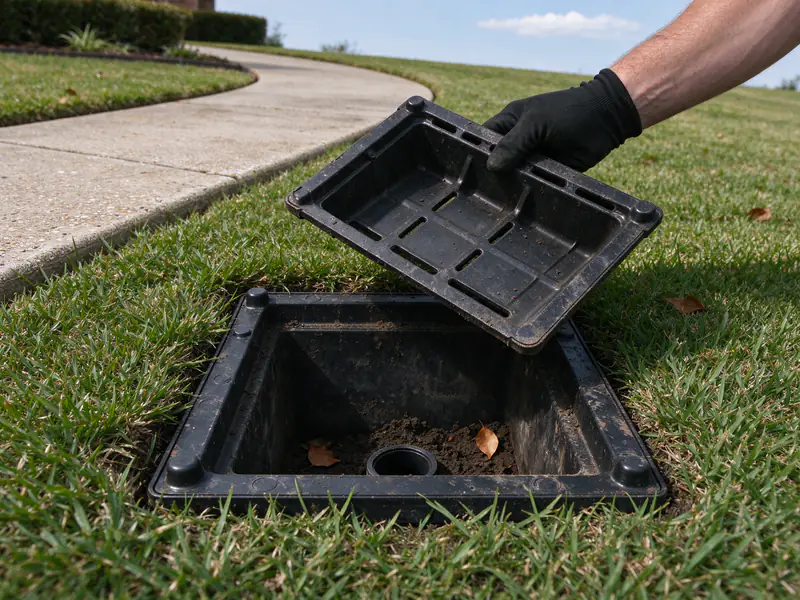
Most residential basins have a 9 to 12 inch grate. The size follows the area draining to it and the pipe leaving it; a basin collecting a large patio or several downspouts gets a bigger grate and pipe.
A small amount of standing water in the sump below the outlet is normal. If the basin stays full a day after rain, the outlet pipe is usually blocked, crushed or laid without enough fall.
Yes, with a grate rated for the traffic over it. In paving, a long channel drain is often better than a round or square basin because paving sheds water as a sheet.
A basin that drains properly holds very little water. One that stays full because of a blocked or flat outlet can. Keeping the outlet clear solves both problems.
They can share the solid pipe that carries water to the outlet. The perforated French drain section and the basin connect into it separately so a burst of surface water does not flood the drain's stone.
Send a photo of the low spot and where your yard drains.