A drain that used to work and now does not has a specific cause. Finding it before digging is what keeps a repair small.
A drain that worked for years and then stopped is telling you something specific. The pipe is clogged, crushed, full of roots or sagging; the outlet is buried; or the drain was built without the fall or filter it needed and has finally filled in. Rein Irving Drainage Company starts every repair by finding which, because the answer decides whether the fix is a flush, a short dig or a rebuild.
Common reasons drains fail
What you see
Likely cause
Typical repair
Outlet dry during a storm
Blocked or buried outlet, or a break upstream
Uncover and clear the outlet, then trace the line
Ground over a French drain stays soft
Clay has filled the stone, or the pipe has sagged
Rebuild the affected section with fabric around clean stone
Catch basin full a day after rain
Blocked, crushed or flat outlet pipe
Flush or jet, then camera and dig the problem spot
Downspout overflowing at the joint
Roof grit or leaves in the line
Flush from the cleanout; add a leaf screen
Sinkhole or soft dip along a line
Separated joint washing soil into the pipe
Dig and reconnect with proper fittings
Pipe full of roots
Perforated pipe or loose joints near a tree
Cut roots, replace the section with solid pipe
Pop-up emitter stuck shut
Grass, mulch or soil over the lid
Clear and raise the emitter
Sump pump running in dry weather
Leaking sprinkler line or valve feeding it
Find and repair the leak
Sock pipe in clay
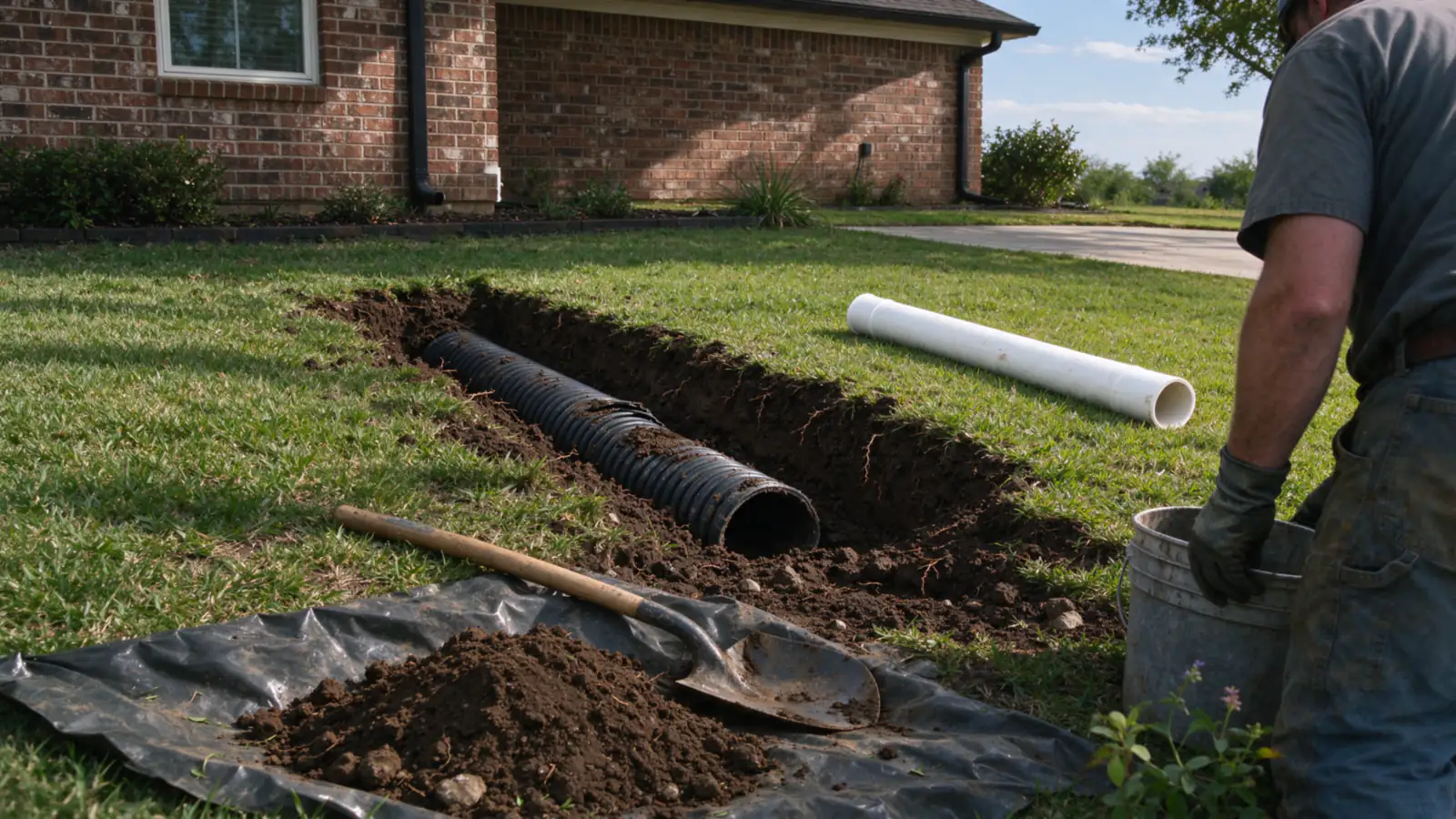
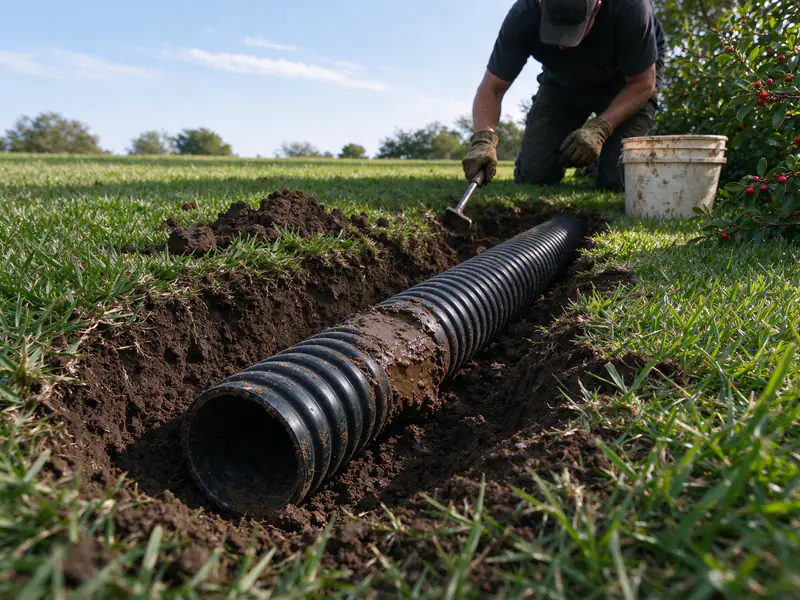
Thin corrugated pipe wrapped in a fabric sock is the most common material in older drains, and in Irving clay it tends to fail in two ways. The thin wall crushes under soil and foot traffic, and the sock collects fine clay until water cannot get through. The Ferris and Heiden clays of Las Colinas are about half clay particles, and those fines move with water. A drain rebuilt with nonwoven fabric around clean washed stone and rigid pipe keeps the fines away from the pipe. The guide to French drains in clay soil explains why.
Drains that never had a chance
Some drains did not wear out; they were built without what they needed:
No outlet. The pipe ends in the yard, in a gravel pit or at a fence. The water has nowhere to go.
No fall. The pipe is level or runs uphill in places, so water sits and silt settles.
Roof water in the French drain. Downspouts tied into perforated pipe flood the stone in every storm. See buried downspouts.
The wrong fix. A French drain under a puddle on hard clay, where the water could never reach the pipe. A catch basin would have caught it.
These are not repaired so much as redesigned, usually as part of a whole-yard plan.
How we find the problem
Ask what changed. When the drain stopped, whether something was built or planted nearby, and what it does in rain.
Check the outlet. Many failures are a buried or crushed outlet.
Run water. Pour water in at a cleanout or the far end and watch where it goes.
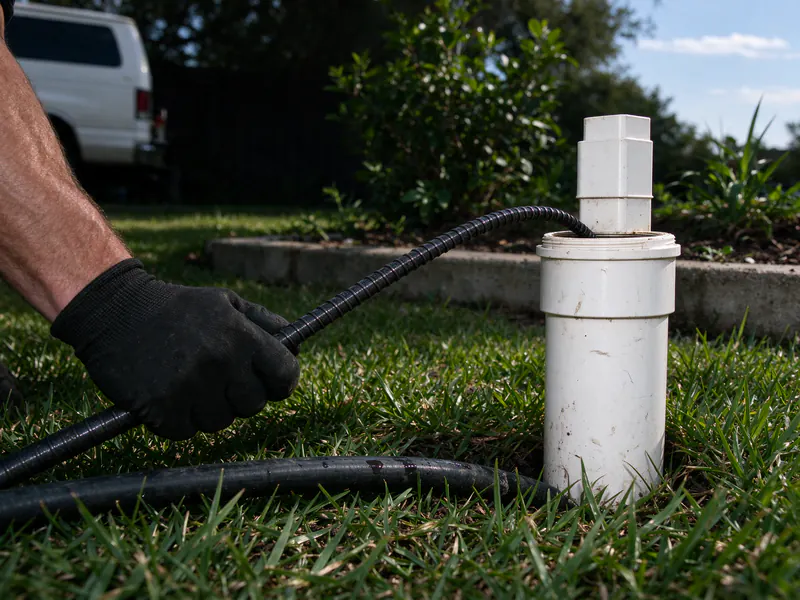
Flush or jet a smooth line to clear sediment, then test again.
Camera and locate the pipe where a blockage remains, marking the spot on the surface.
Dig only there where the line is sound elsewhere, and repair that section.
Repair or rebuild
A blocked outlet, a section crushed by a vehicle, a root intrusion or a separated joint is a local repair: dig at the spot, replace the section with proper fittings, test and backfill. A drain whose stone is full of clay along its length, or one built with no fall or no outlet, gets rebuilt. The rebuild follows the same method as a new French drain installation: outlet first, fabric around clean stone, rigid pipe and cleanouts. The guide to how long a French drain lasts covers the warning signs.
When it is not the drain
Sometimes the drain is fine and the water source changed: a neighbor regraded, a new patio sends water to a different corner, or a sprinkler leak keeps the ground wet in dry weather. Checking the water meter with everything off rules out a leak. If the source has changed, standing water in the yard walks through the possibilities.
How the work runs
811 locate before digging.
Diagnose with water tests, flushing and a camera where needed.
Repair or rebuild the affected section with proper fittings and solid pipe where roof water runs.
Water test before backfill.
Restore sod and repair crossed sprinkler lines.
Rein Irving Drainage Company plans and manages each job; installation is carried out by licensed and insured drainage contractors we work with.
Cost
Repairs are priced by what the diagnosis finds. Flushing and a camera inspection are a small part of the cost; most of a repair is the dig, the length replaced, and the restoration of sod, paving and sprinklers above it. A full rebuild of a French drain falls in the same range as a new one, about $25 to $55 per foot installed in the Dallas area. The drainage cost guide and the cost tool help set a budget.
Keeping a repaired drain working
Check outlets after big storms, keep catch basins and channel grates clear after leaf drop, flush lines through their cleanouts if ground over them starts staying wet, and keep gutters clean so roof grit stays out of downspout lines.
What this work looks like
Old corrugated drain pipe exposed in a repair dig in a lawnDrain cleaning cable fed into a white cleanout riser in a lawn
Questions people ask
How do I know if my French drain is clogged?
The ground over the line stays soft or wet after rain, water stands where it used to drain, or the outlet stays dry during a storm. Pouring water into a cleanout or the far end and watching the outlet shows whether water is getting through.
Can a clogged drain be cleaned instead of replaced?
Often, when the problem is sediment or leaves inside a smooth pipe. Flushing or jetting from a cleanout clears it. When clay has filled the stone around the pipe, or the pipe is crushed, the affected section has to be rebuilt.
Why do tree roots get into drain lines?
Roots follow moisture, and a perforated pipe or a loose joint leaks a little water into the soil around it. Roots grow into the opening and fill the pipe. Solid pipe with sealed joints near trees resists them.
What does a drain camera show?
A camera pushed through the pipe shows clogs, roots, crushed sections, separated joints and sags where water sits. Paired with a locator, it marks where on the surface the problem is, so only that spot is dug.
Is it worth repairing an old drain or starting over?
It depends on why it failed. A blocked outlet or one crushed section is a small repair. A drain built with no outlet, no fall or sock pipe in clay usually failed by design, and rebuilding it correctly costs less over time than patching it again.
Drain stopped working?
Tell us what kind of drain it is, when it was installed and what you see in rain.